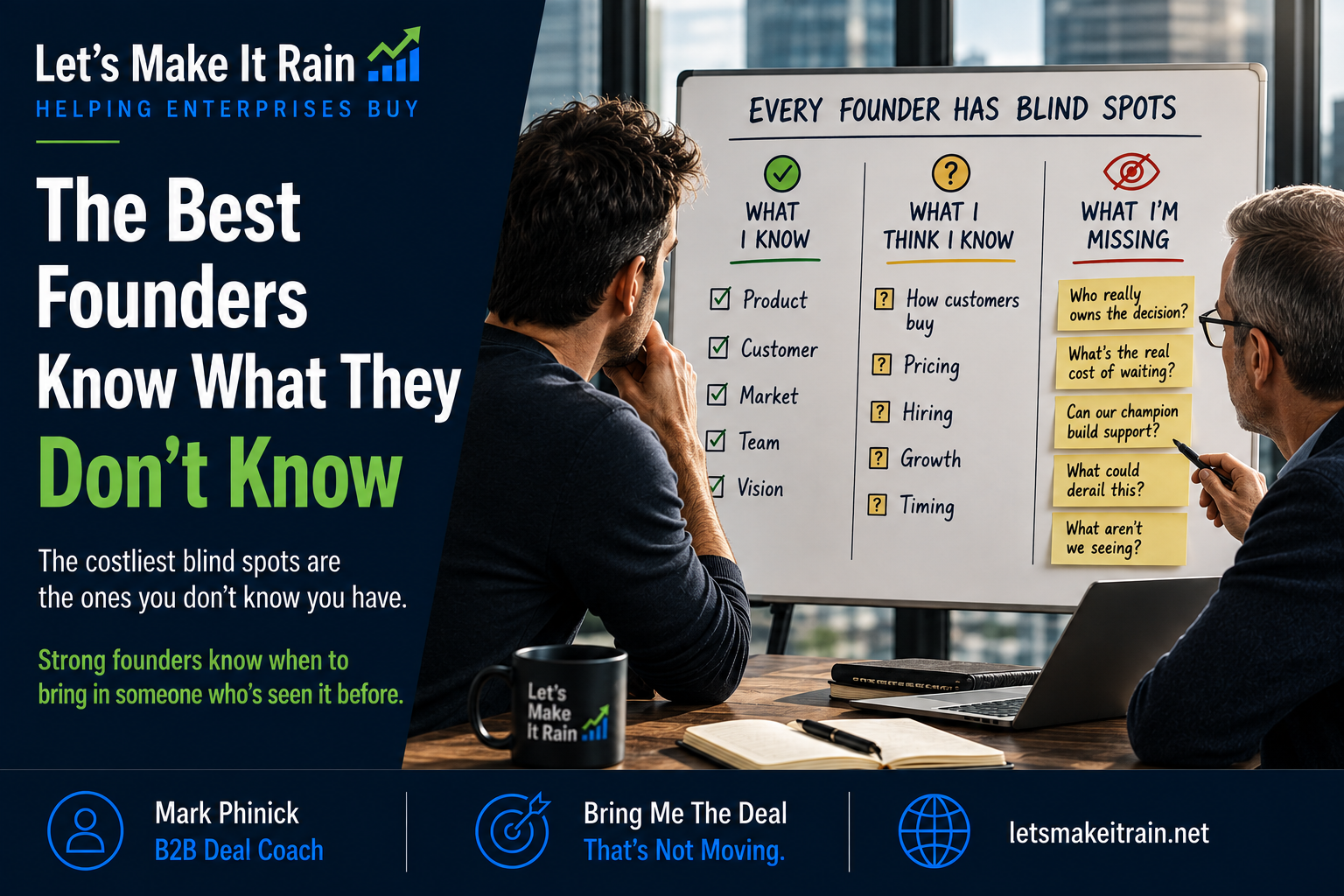
The Best Founders Know What They Don’t Know
The best founders know where their experience ends. Learn how self-awareness, specialist coaching, and outside pattern recognition can reduce costly blind spots.
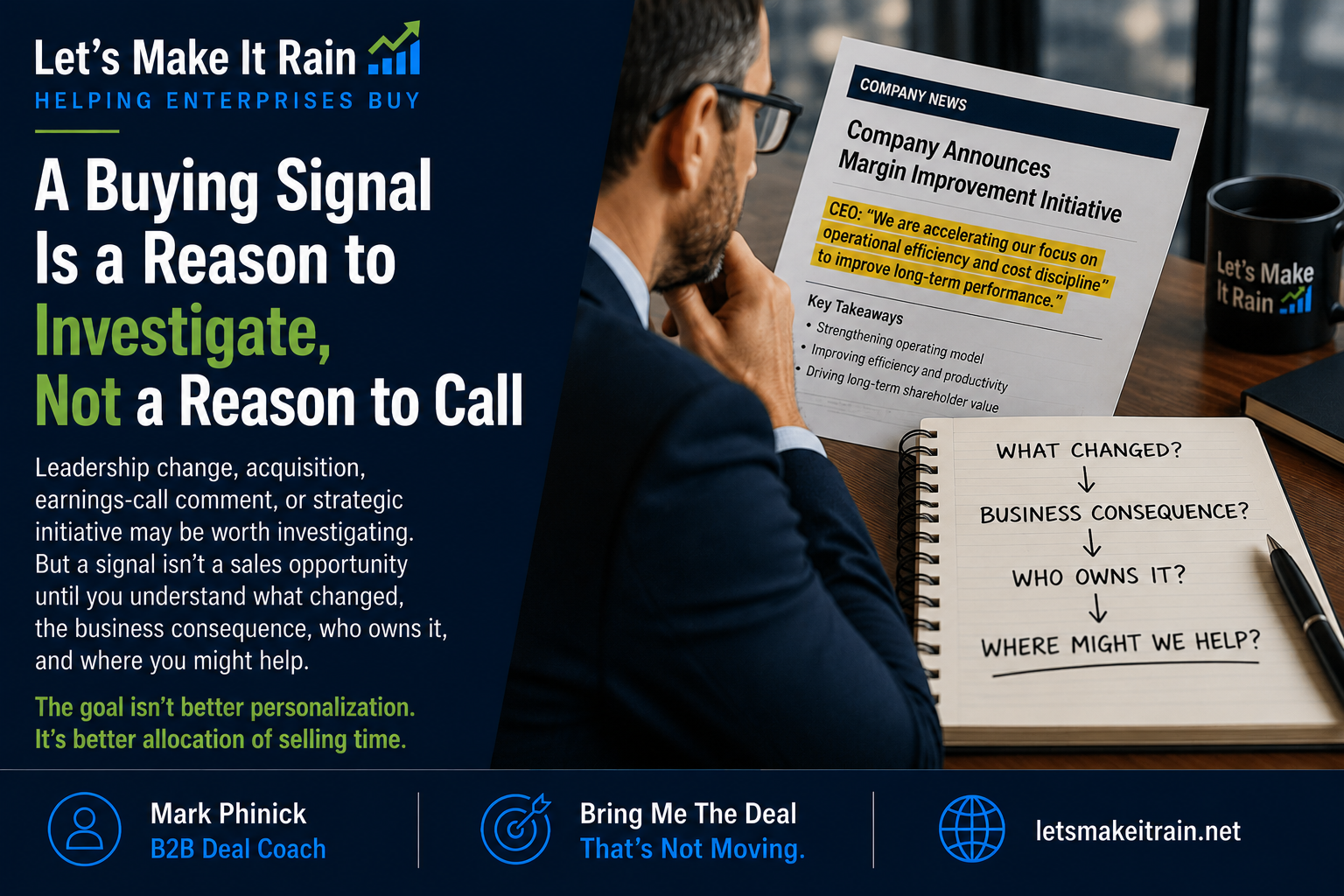
A Buying Signal Is a Reason to Investigate, Not a Reason to Call
A leadership change, acquisition, earnings-call comment, or strategic initiative may be worth investigating. But a signal isn’t a sales opportunity until you understand what changed, the business consequence, and who owns it.
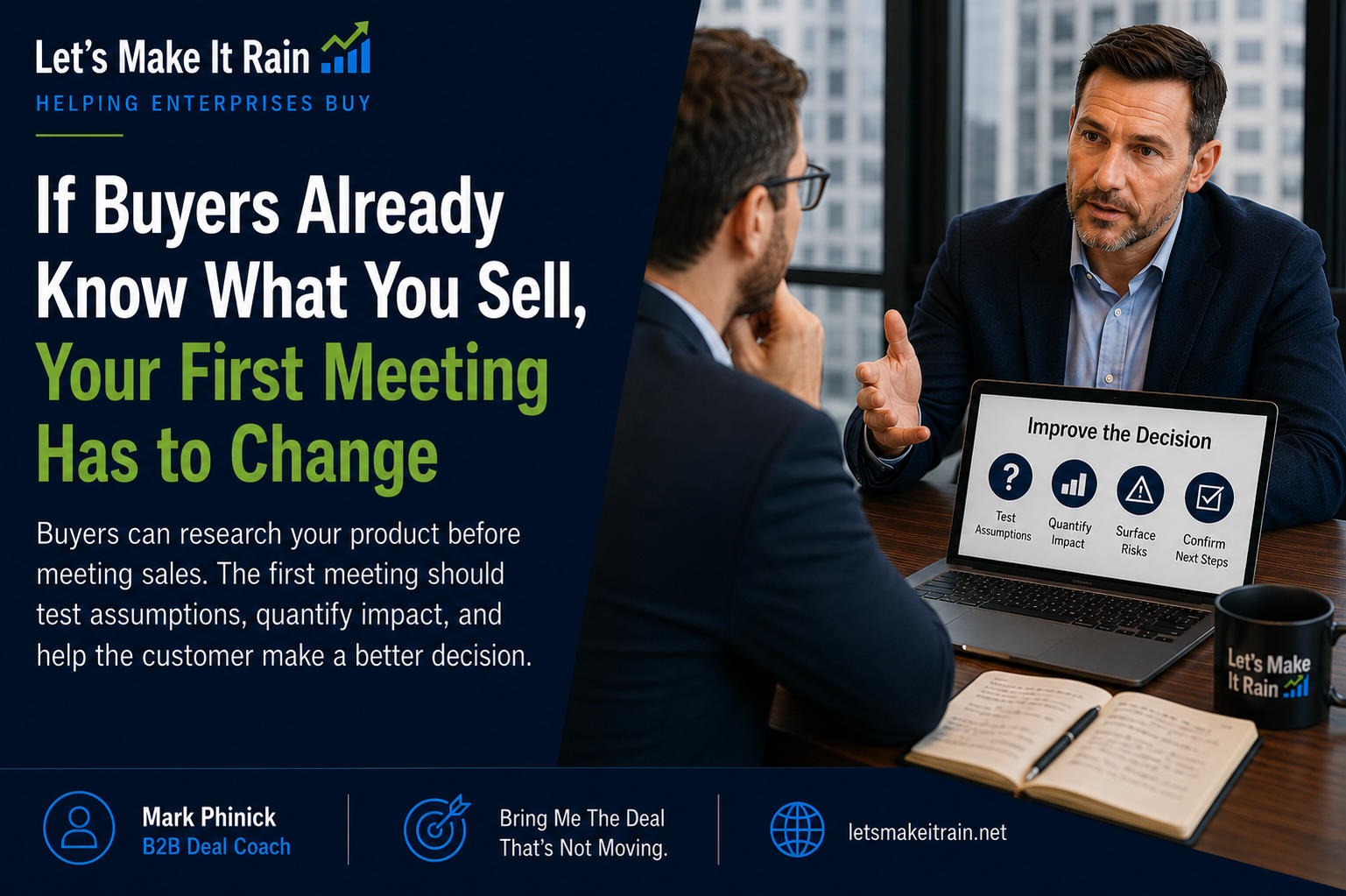
If Buyers Already Know What You Sell, Your First Meeting Has to Change
When buyers already understand your product, more information isn’t enough. The first meeting has to help them test assumptions, understand the economics, and make a better decision.
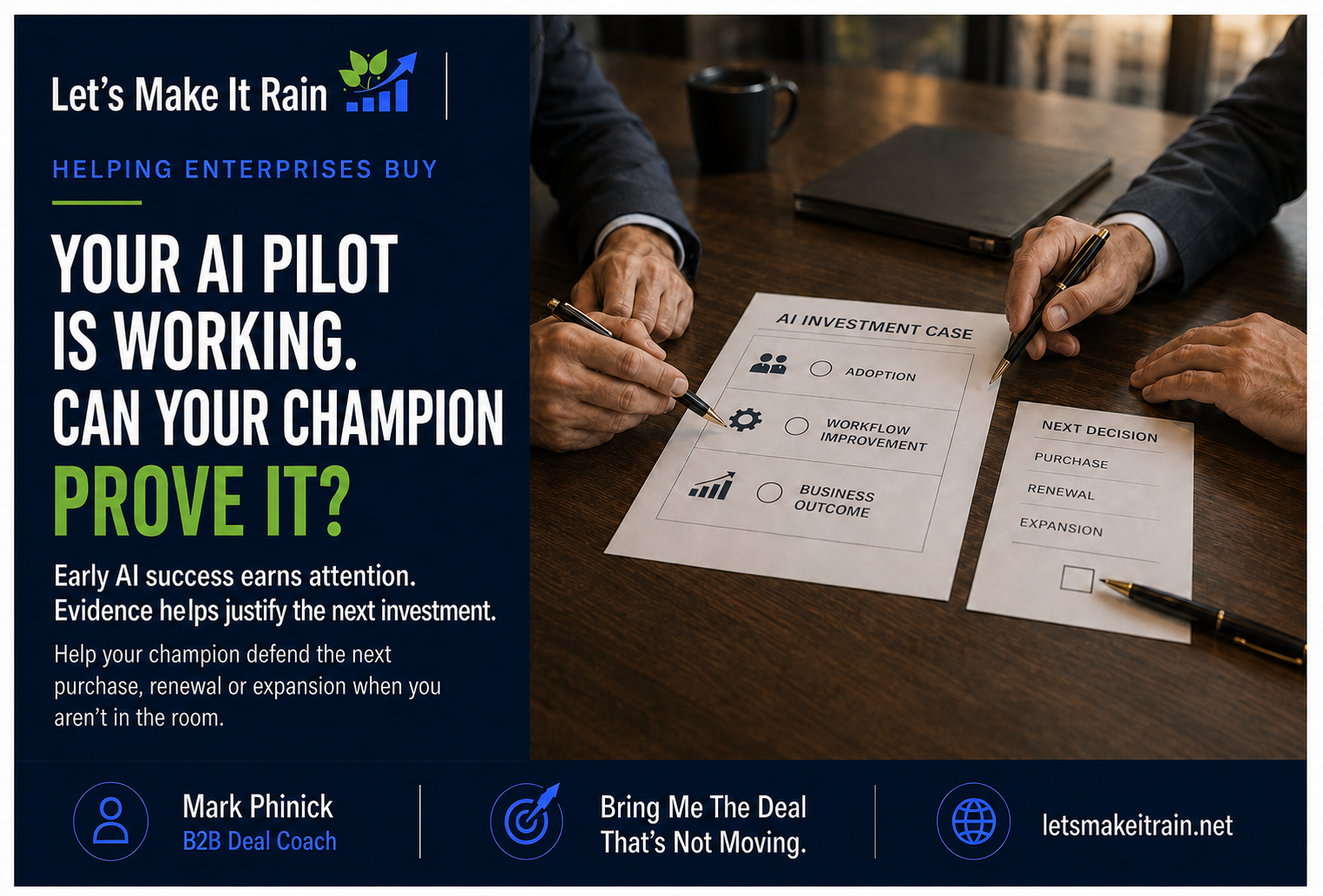
Your AI Pilot Is Working. Can Your Champion Prove It?
AI adoption shows that a pilot is being used. The next investment requires stronger proof. Here’s how AI founders and sellers can help champions connect workflow improvement to business value and build a defensible investment case.
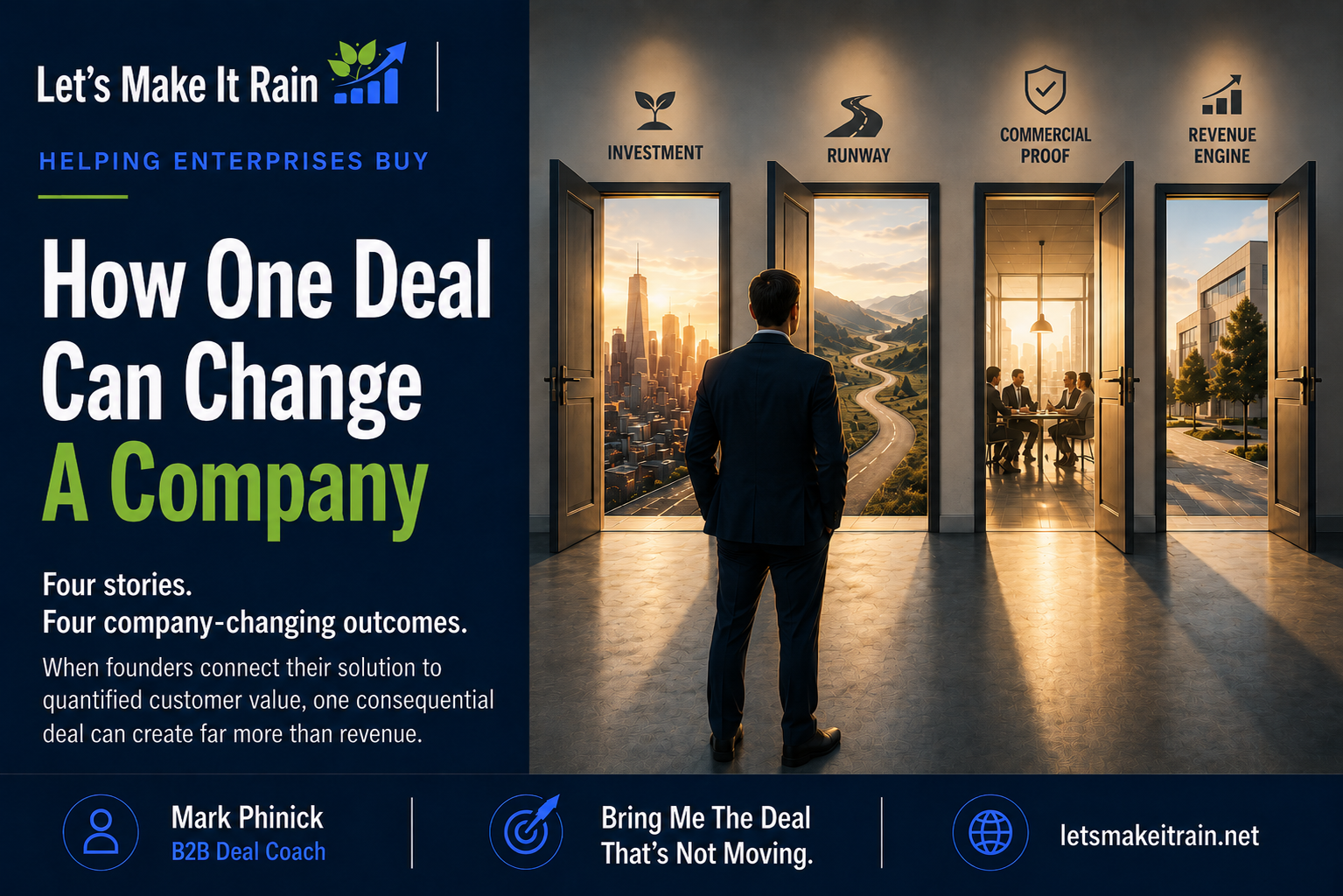
How One Deal Can Change A Company
Four stories show how consequential deals created value beyond contract revenue by triggering investment, extending runway, improving conversion, and reducing commercial risk.
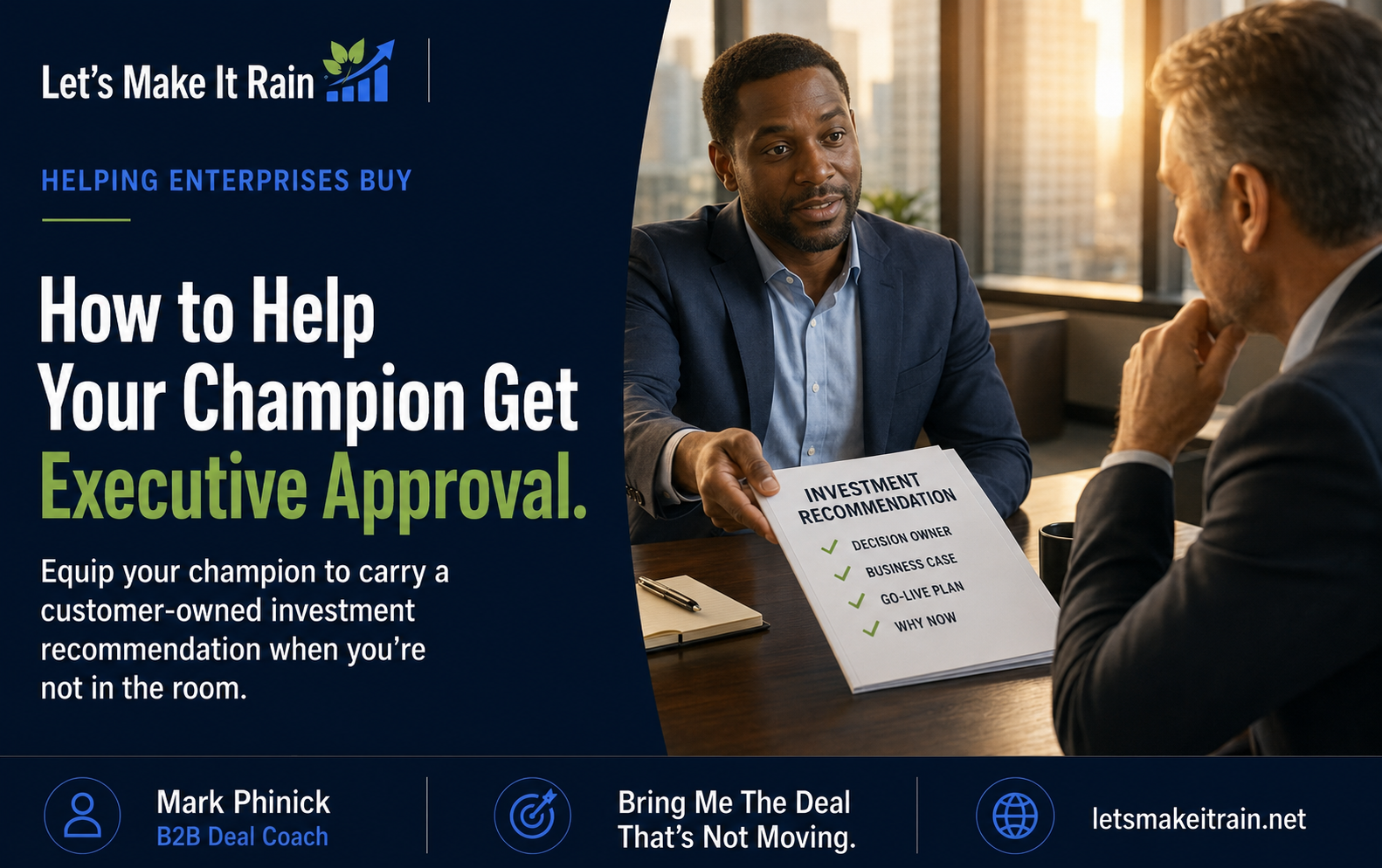
How to Help Your Champion Get Executive Approval
Your champion may have to carry the recommendation into an executive meeting without you. Equip them with a defensible business case, credible go-live path, Decision Owner, and reason to act now.
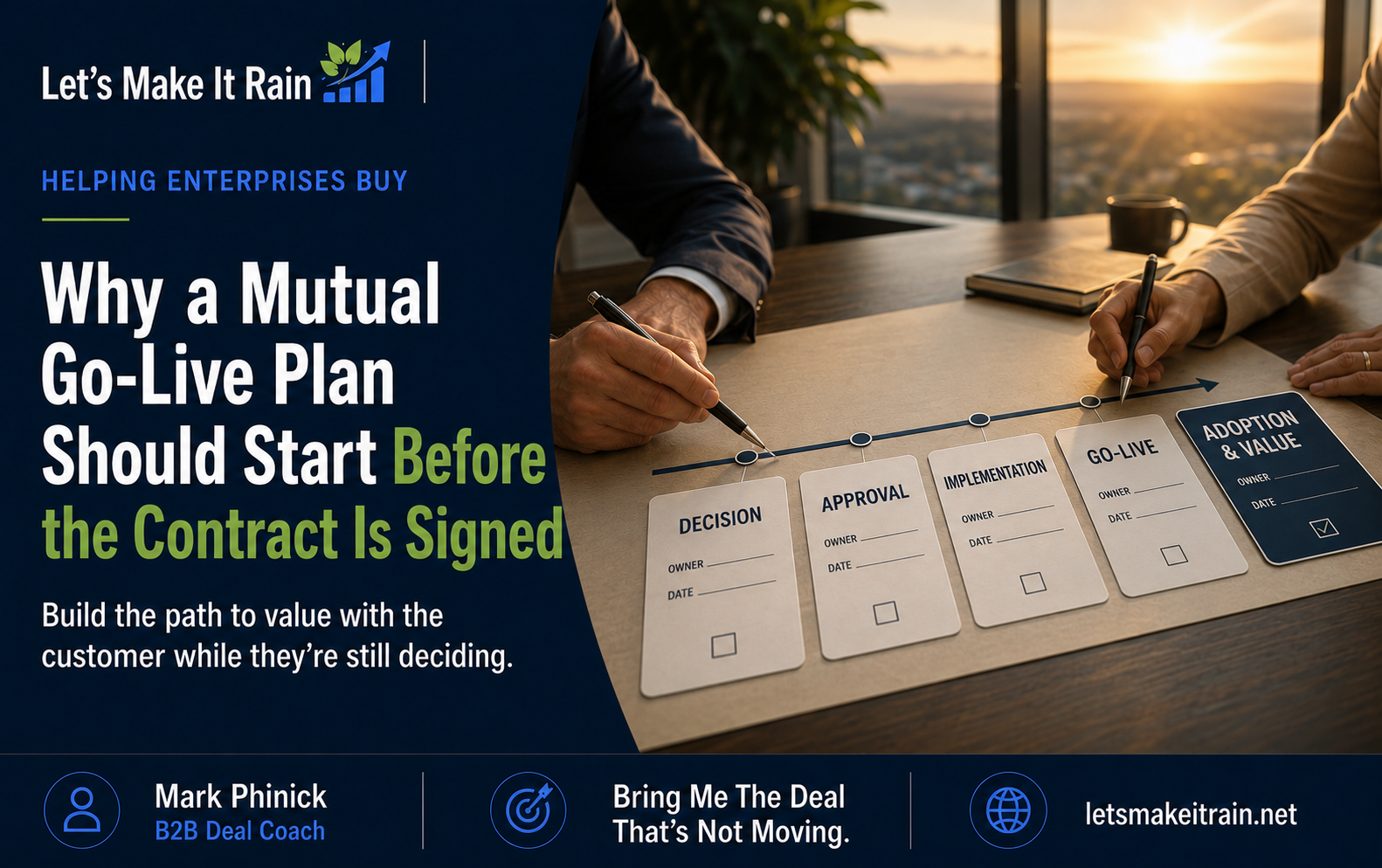
Why a Mutual Go-Live Plan Should Start Before the Contract Is Signed
Buyers assess execution risk before they sign. A Mutual Go-Live Plan helps sellers and customers map the actions, owners, dates, adoption, and measurement required to reach business value.
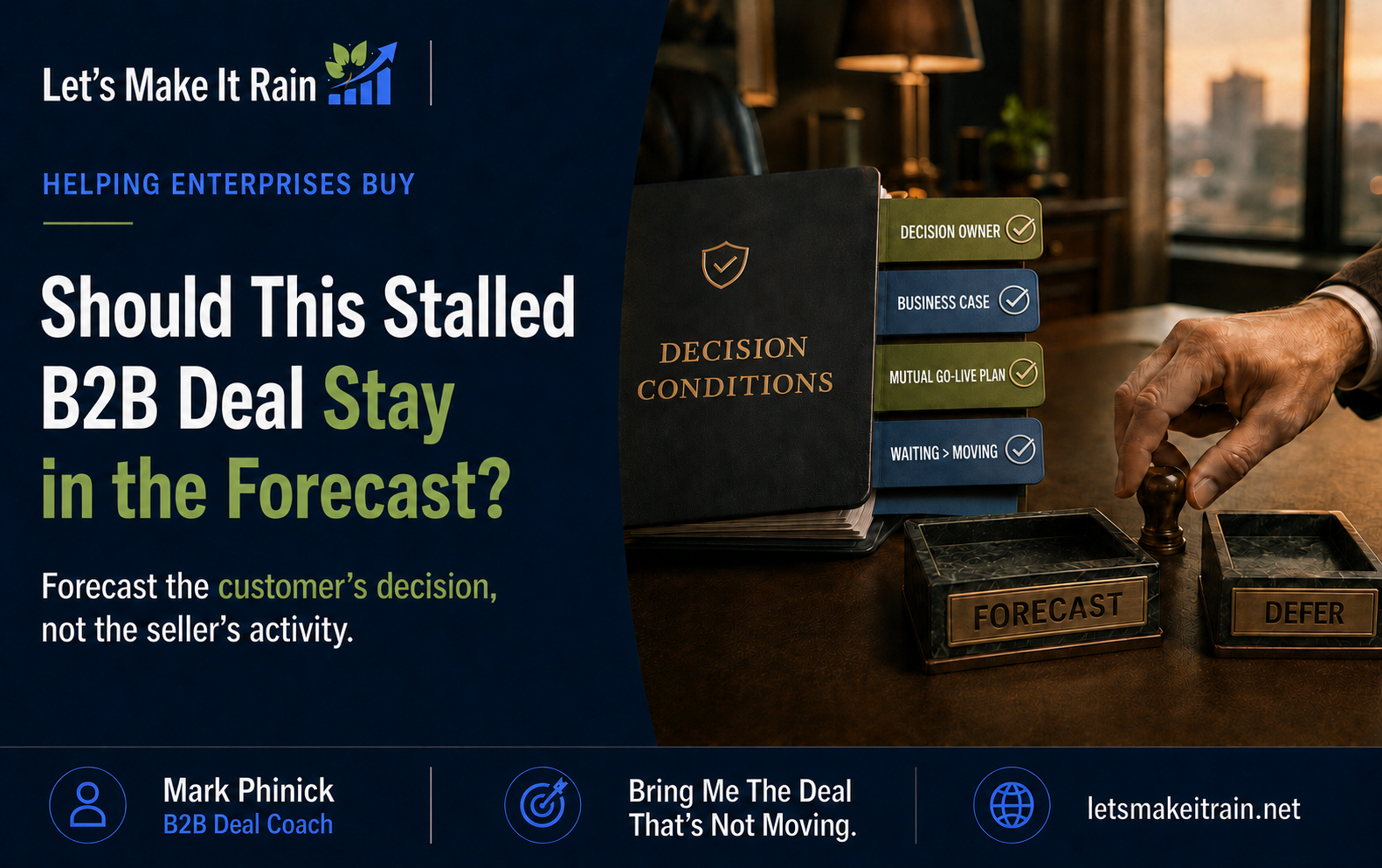
Should This Stalled Deal Stay in the Forecast?
A stalled deal may still close someday. Forecast inclusion should depend on customer-owned decision evidence and a supported path to a decision within the forecast period.
How to Quantify the Cost of Inaction Without Making Up the Math
The cost of waiting can create urgency, but only when the customer believes the math. This framework uses customer-supported assumptions, defensible ranges, and clear validation gaps.
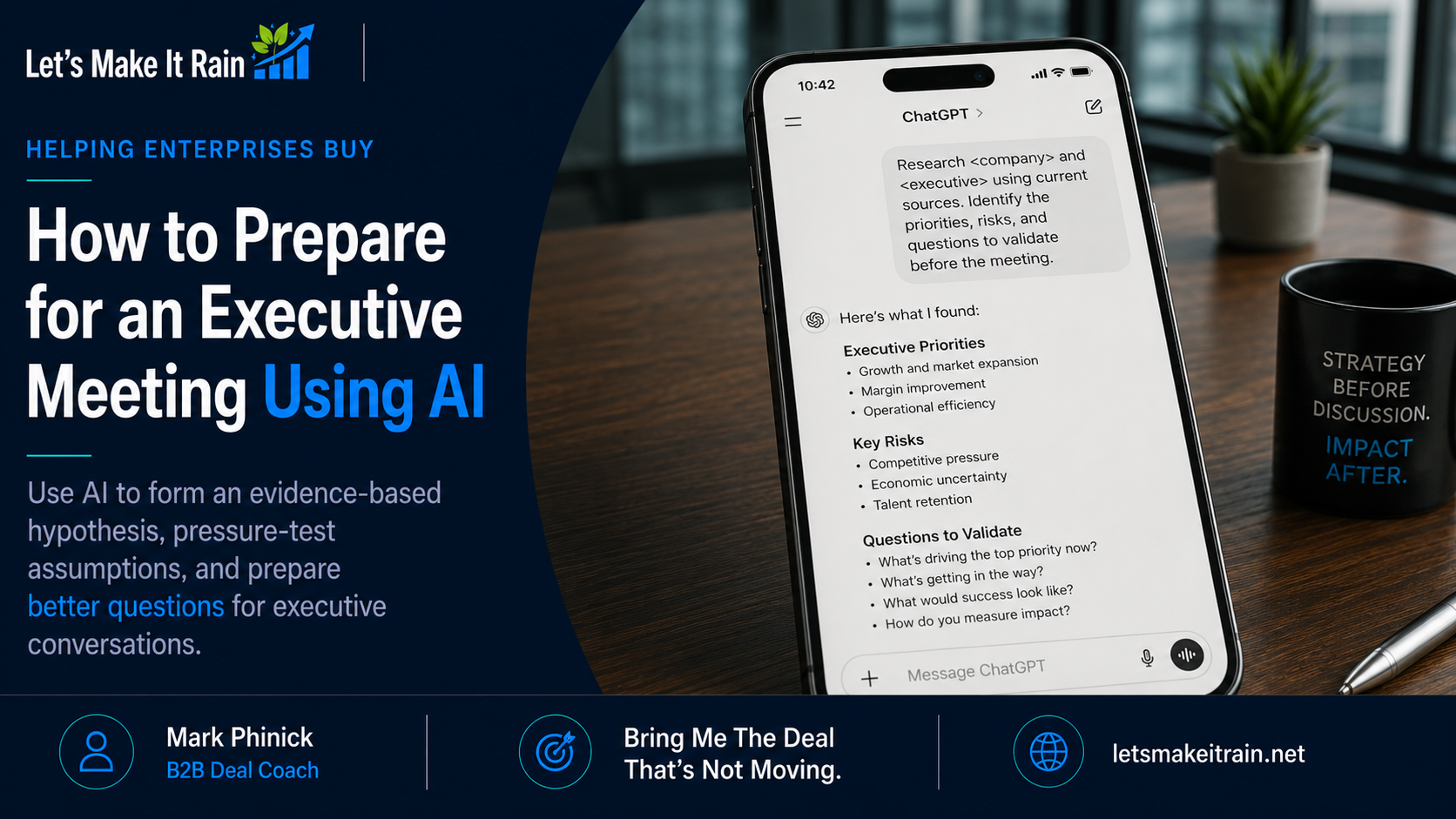
How To Prepare For An Executive Meeting with AI
A step-by-step process for using AI to research a company and executive, pressure-test the findings, and prepare for a stronger sales meeting.
Why Enterprise Deals Go Quiet
Mark Phinick explains why enterprise deals go quiet, how to distinguish internal progress from a fading opportunity, and what sellers should learn before following up again.
“We’re Interested” Isn’t the Same as “We’re Ready.”
Enterprise AI buyers can be interested without being ready to buy. Learn how to recognize the difference between engagement and decision readiness inside live AI opportunities.

Enterprise AI Buyers Aren’t Just Choosing the Best AI. They’re Choosing the Provider They Believe They Can Succeed With.
Enterprise AI buyers aren’t only evaluating the technology. They’re also deciding which provider gives them the strongest confidence they can integrate it, manage the risk, drive adoption, and produce the business result.
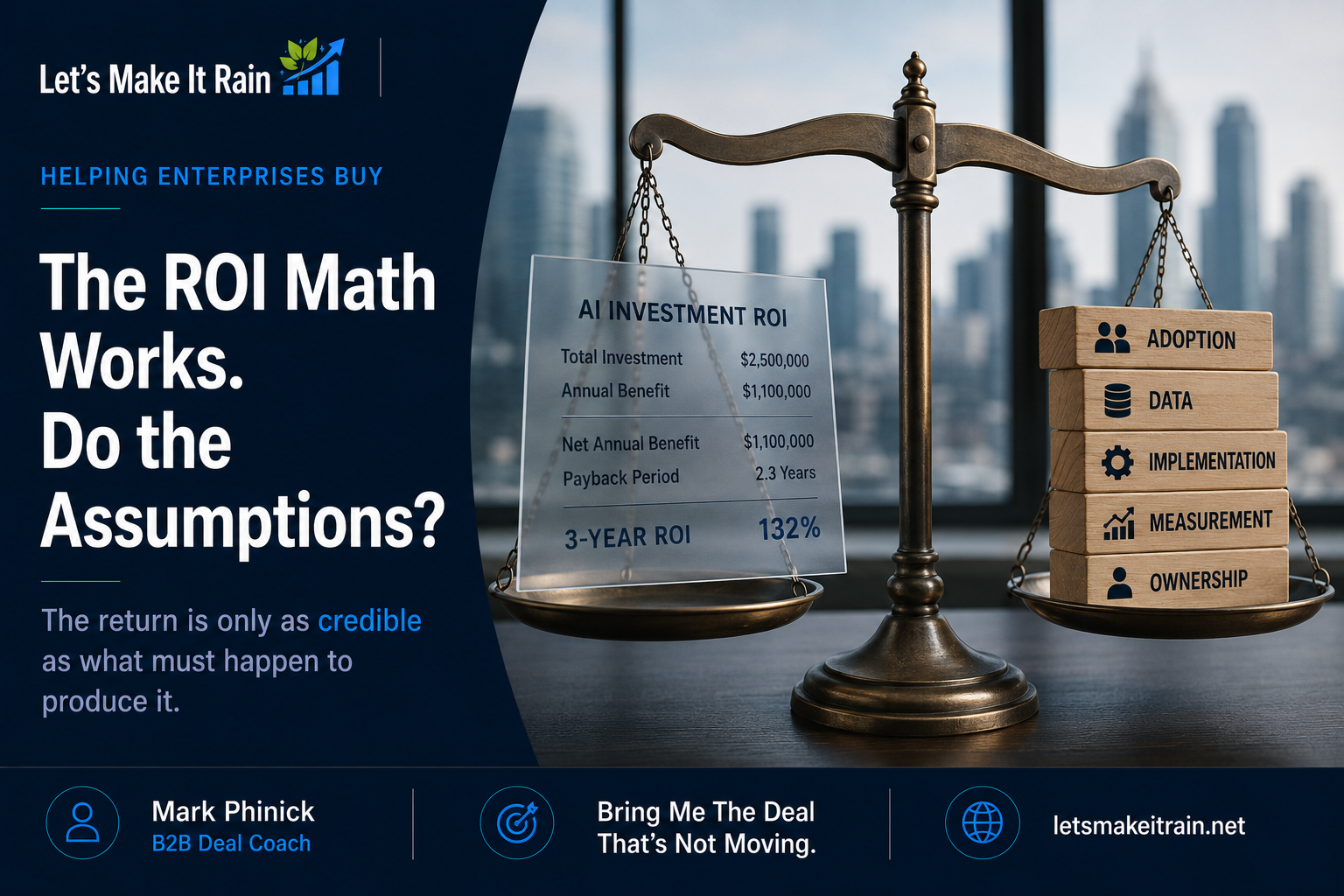
Enterprise AI ROI Depends on the Assumptions Behind the Math
Enterprise AI ROI isn’t judged on the math alone. Buyers also need to believe the assumptions around adoption, data, implementation, measurement, and ownership.
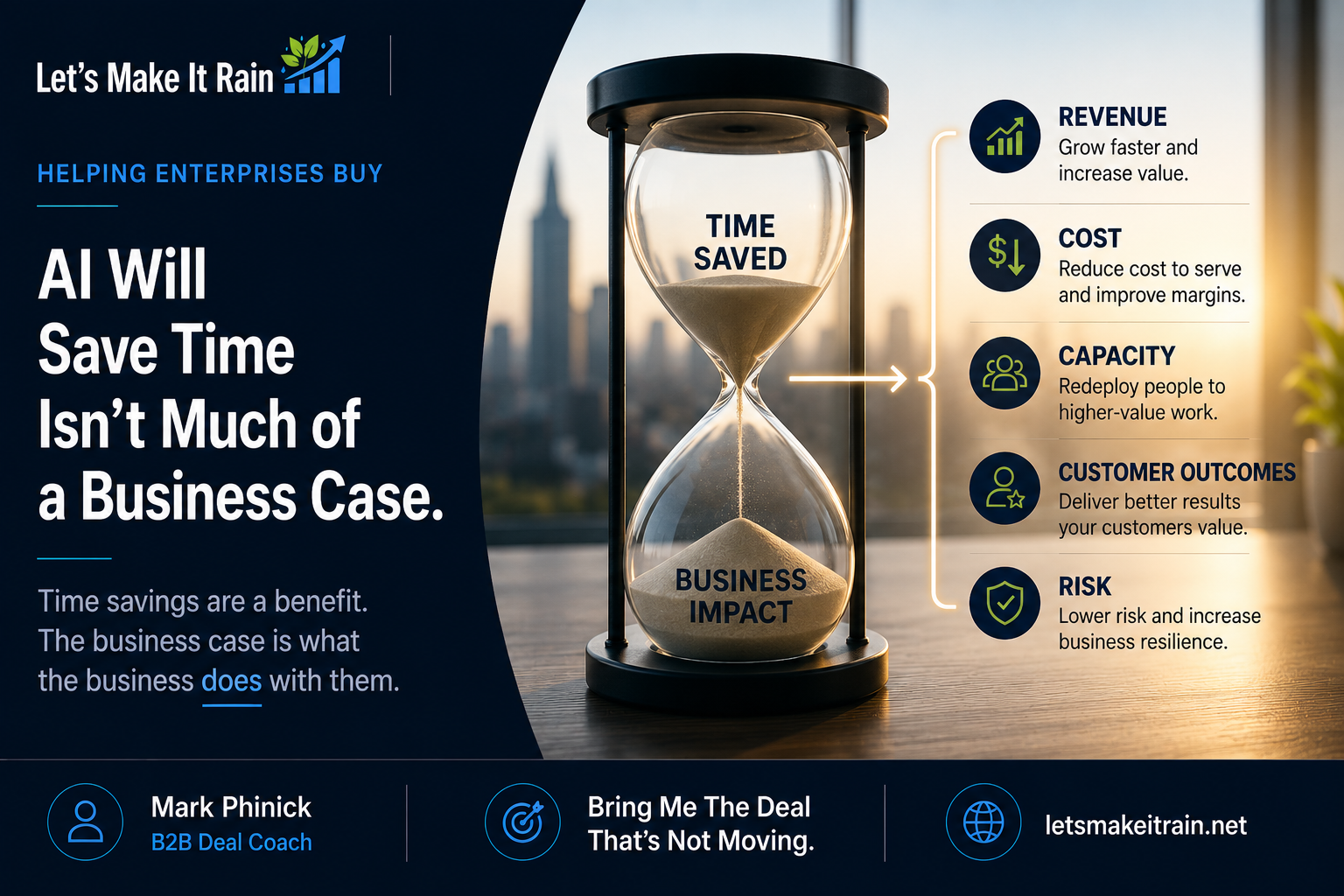
“AI Will Save Time” Isn’t Much of a Business Case
Time savings don’t automatically create an enterprise AI business case. The value comes from what the business does with the time, whether that means more capacity, lower cost, faster delivery, or less risk.
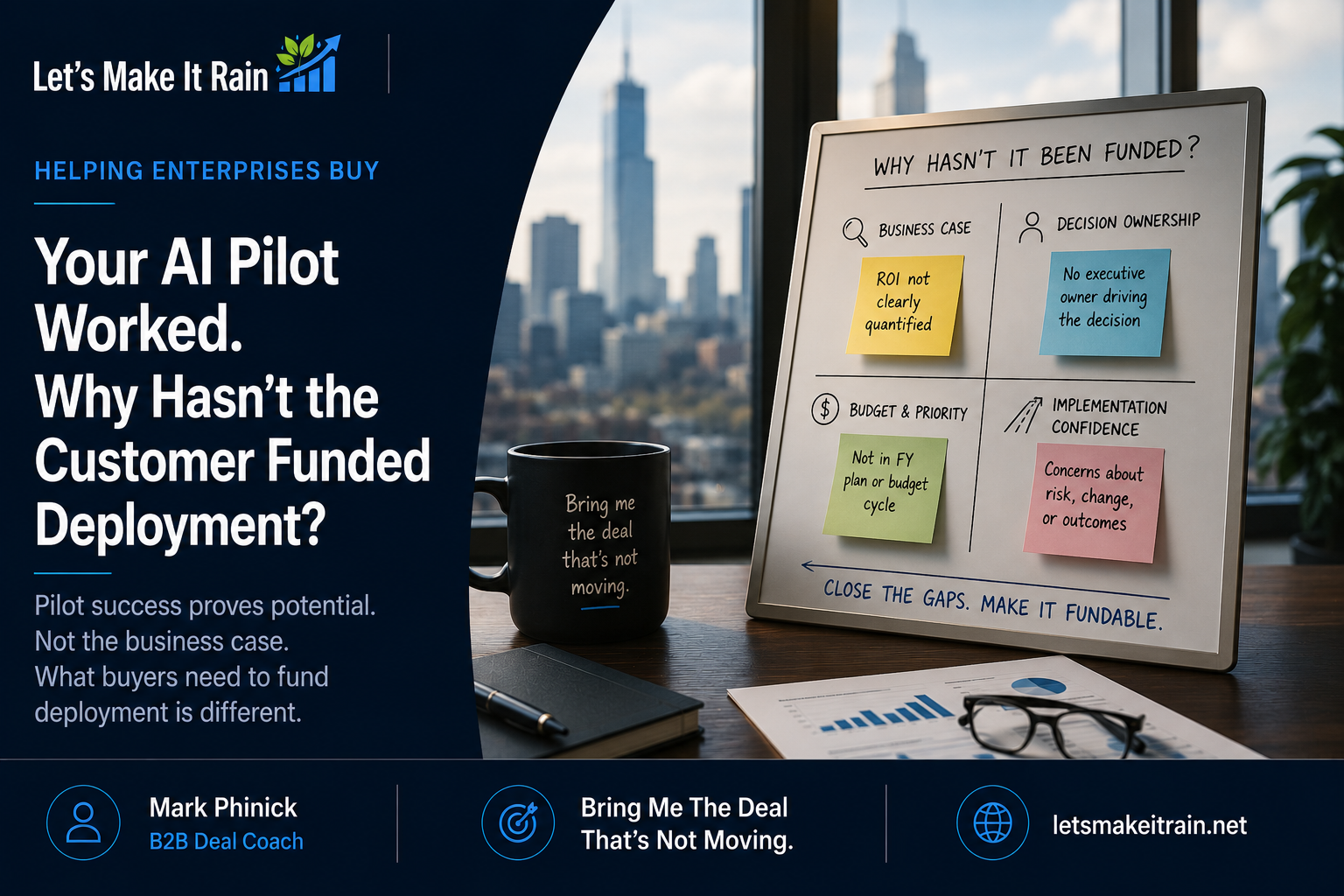
Your AI Pilot Worked. Why Hasn’t the Customer Funded Deployment?
A successful AI pilot proves the technology works. It doesn't necessarily prove the organization is ready to fund, deploy, govern, and own the change. That's often why technically successful pilots never become enterprise deployments.
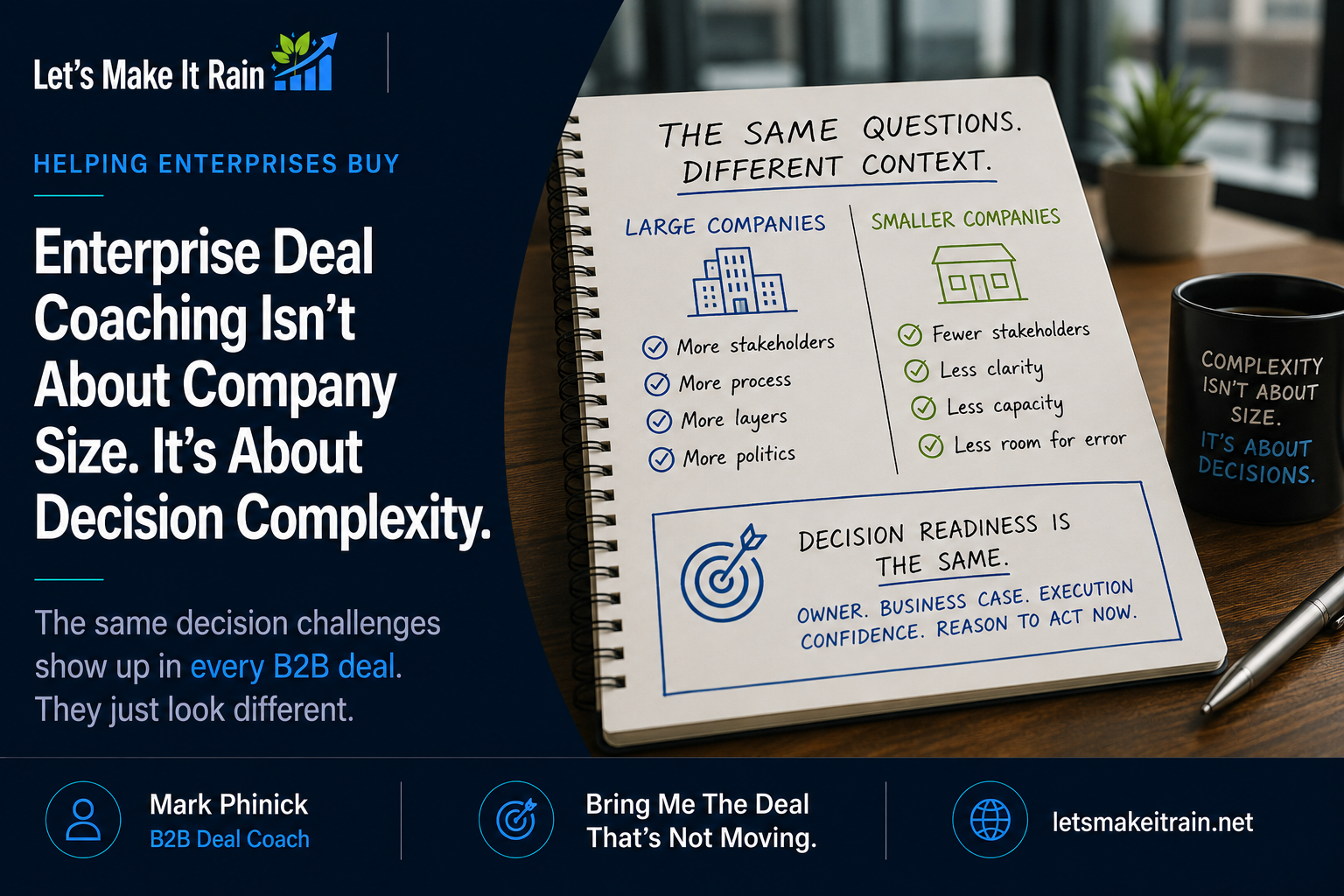
Enterprise Deal Coaching Isn’t About Company Size. It’s About Decision Complexity.
Enterprise deal coaching isn’t limited to selling into large companies. Smaller B2B deals can be just as difficult when decision ownership, budget, priorities, and execution risk are unclear.
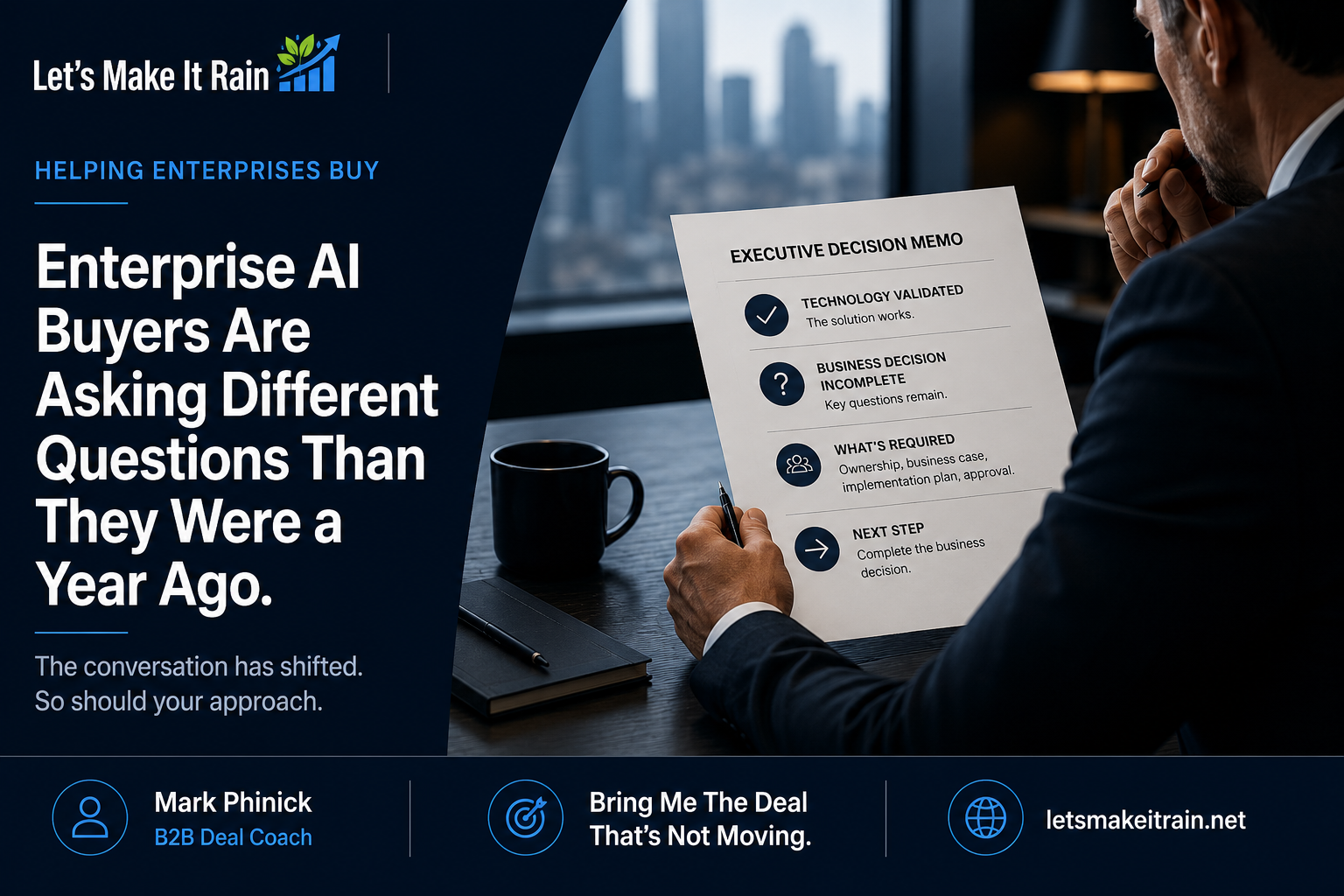
Enterprise AI Buyers Are Asking Different Questions Than They Were a Year Ago
Enterprise AI deals can pass the technical test and still stall because the customer hasn't completed the business decision. A successful pilot proves the technology works. It doesn't prove the organization is ready to fund, deploy, and own the change.
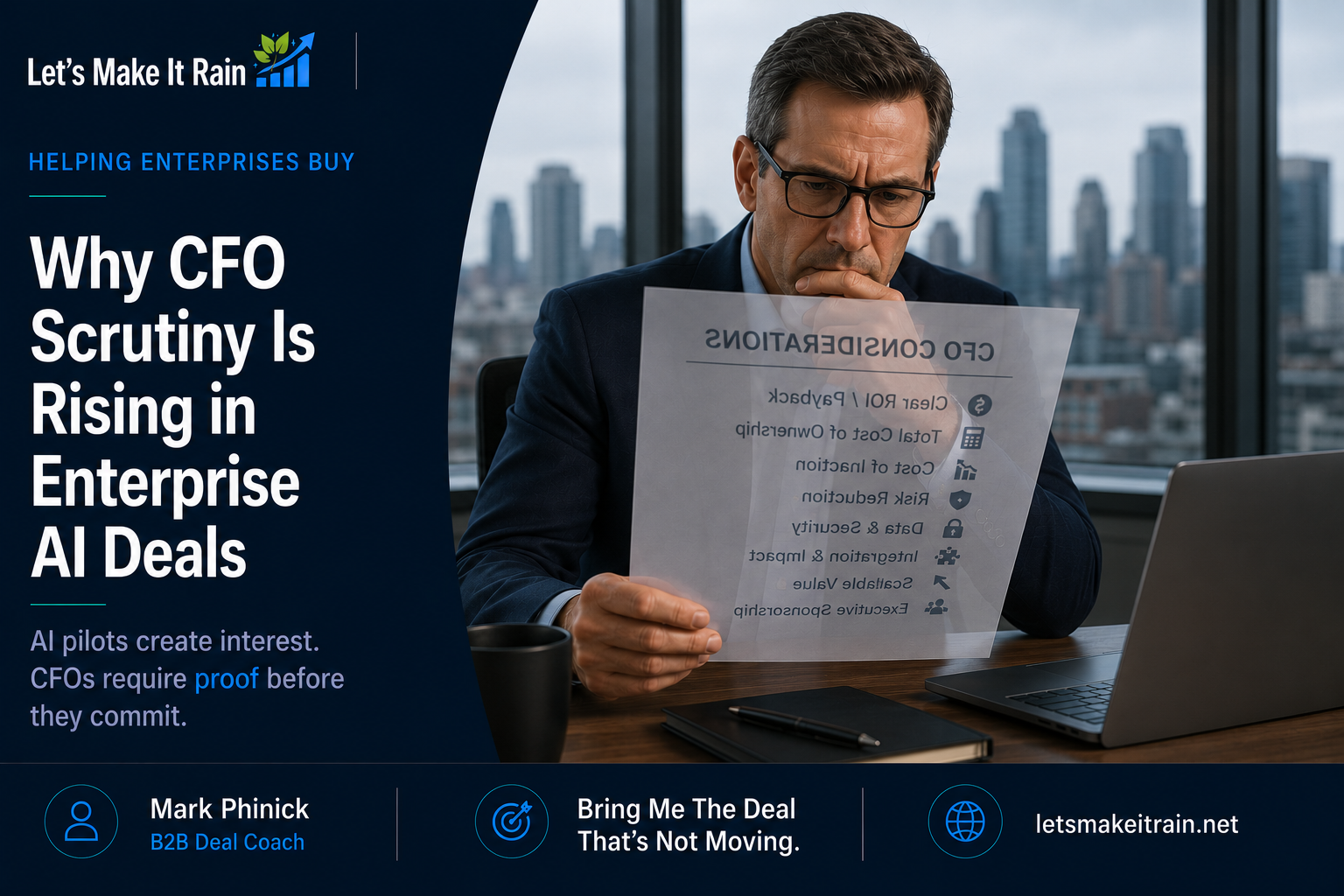
Why CFO Scrutiny Is Rising in Enterprise AI Deals
As AI moves from pilots to enterprise deployment, CFOs are applying greater scrutiny to costs, measurable value, risk, and new vendor commitments.
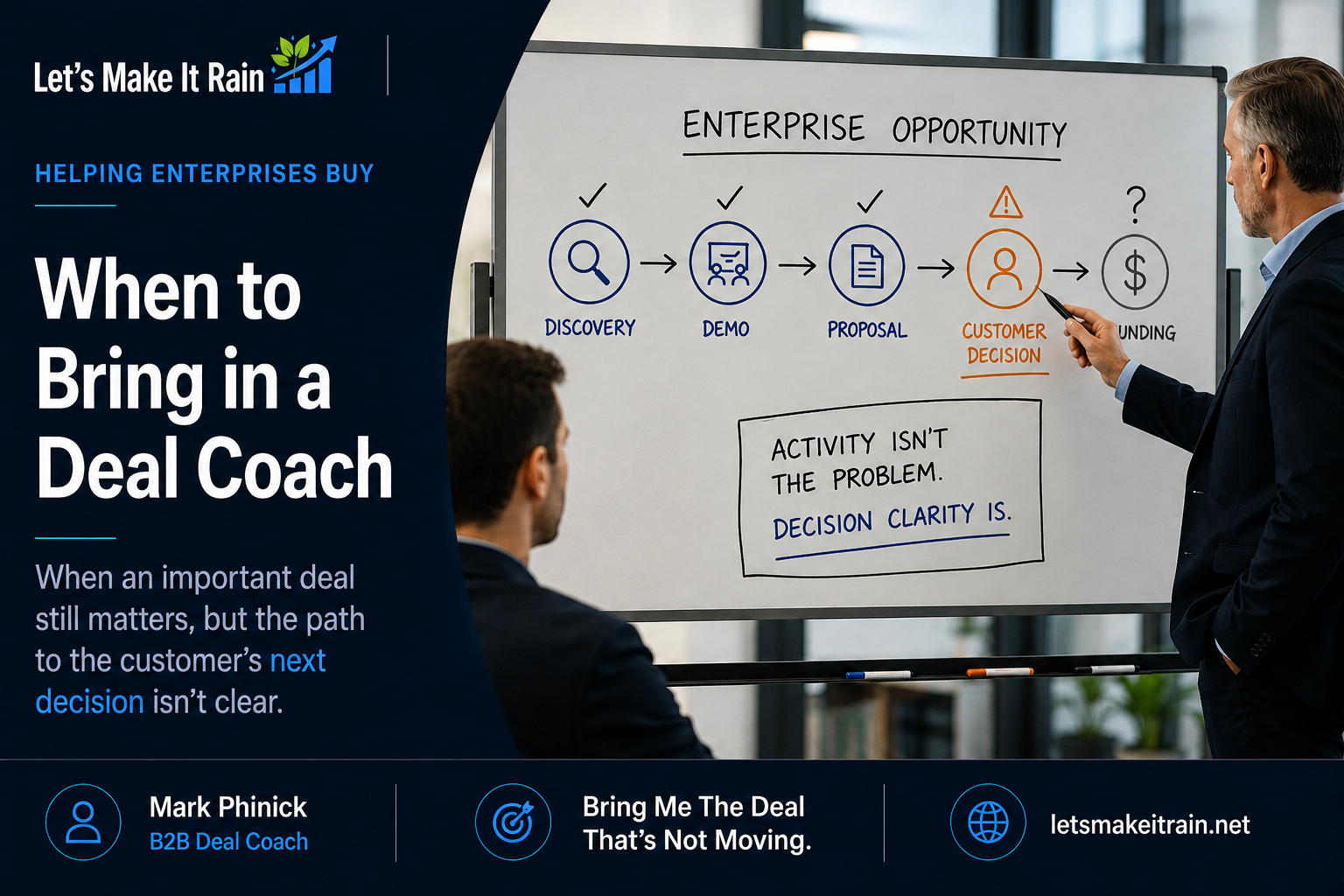
When to Bring a Deal Coach Into a Live Opportunity
Five signs that live enterprise deal coaching may help uncover risk, strengthen the business case, equip the champion, improve forecast accuracy, and move a customer decision forward.